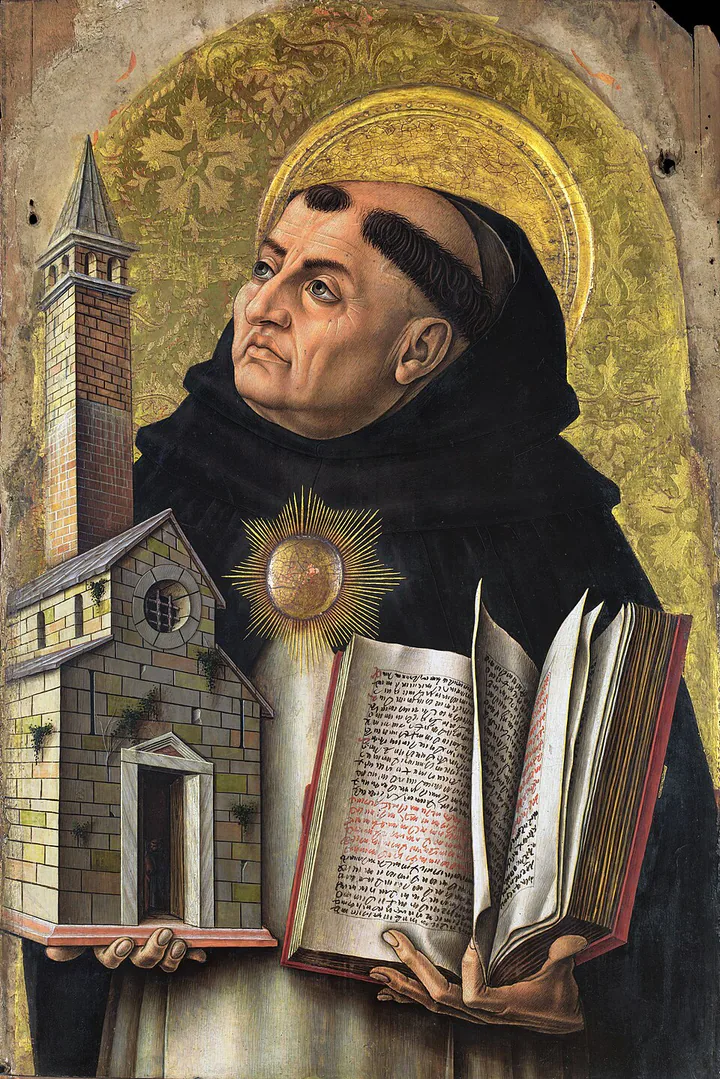

Permanent scholarly record
Thomas Aquinas
c. 1225–1274
Thomas Aquinas was a thirteenth-century Dominican theologian and philosopher whose work joins Christian theology with a demanding account of reason, law, and human goods. In the Summa Theologiae, he describes law as an ordinance of reason for the common good, made by one responsible for a community and promulgated. His natural-law account holds that moral reasoning is not mere obedience to arbitrary orders: practical reason identifies goods such as life, knowledge, and social life, then judges how action should respect them. In this course, Aquinas gives students a way to ask whether a rule, policy, or AI practice serves genuine human goods and remains answerable to public reason.
In PHIL 123
Why this thinker matters
Aquinas separates rational moral authority from simple command-following.
- Primary texts
- Summa Theologiae Law