
Permanent scholarly record
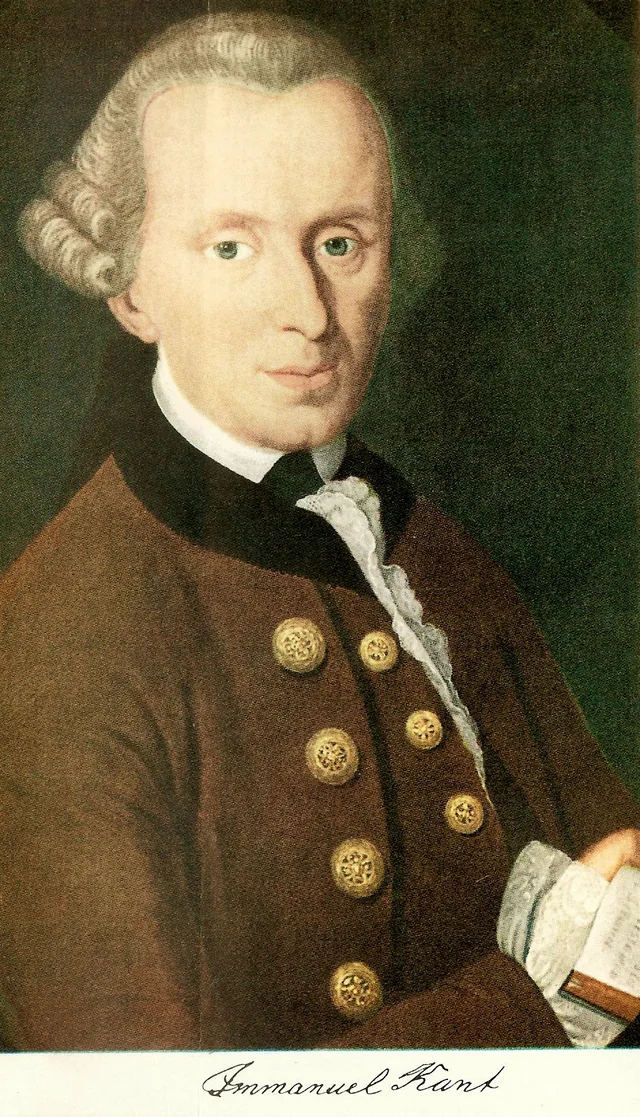
Immanuel Kant
1724–1804
Immanuel Kant was an eighteenth-century philosopher whose moral theory centers on autonomy, universal law, and respect for persons. In the Groundwork of the Metaphysics of Morals, he argues that moral requirements do not rest on convenience, expected rewards, or a ruler's command; they bind because rational agents can recognize principles they can will as law for everyone. His familiar formulations of the categorical imperative ask students to test both whether a maxim could be universalized and whether it treats people always as ends and never merely as means. In AI ethics, Kant sharpens questions about consent, manipulation, surveillance, and the temptation to trade a vulnerable person's standing for a larger aggregate benefit.
In PHIL 123
Why this thinker matters
The deontology chapter uses Kant to make autonomy and the prohibition on treating persons merely as means concrete in AI-mediated cases.
- Primary texts
- Groundwork Metaphysics Morals